Small-Batch Trial Orders: Priced by Changeovers, Not Units
A mixed $2,000 trial order is quoted by changeovers, not units. Sequencing, color grouping and cut programs decide whether a first order ships in 7–10 days.
What this note covers
A mixed $2,000 trial order is quoted by changeovers, not units. Sequencing, color grouping and cut programs decide whether a first order ships in 7–10 days.
Covers: small batch rehab equipment manufacturer · low MOQ mobility aids supplier · mixed model trial order production · laser cut tube without tooling · in-house injection molding low volume · how long does a small trial order take
Key figures at a glance
A mixed trial order is not quoted per unit. It is quoted by how many times the plant has to stop and change something — the cut program, the hole pattern, the injection color, the print artwork, the coating batch. Six models at $2,000 does not cost six times one model at $2,000, but it does cost more than one model at $2,000, and the gap is entirely a scheduling question rather than a product question. Buyers who understand that gap stop negotiating the wrong number.
The quote is a changeover count in disguise
Ask for a price on 200 units of one shower chair and the supplier is really quoting one set-up plus 200 units of running time. Ask for the same 200 units split across four models and the running time barely moves — the set-ups quadruple.
That is why the second model on a small order feels disproportionately expensive and the tenth unit feels free. On a container order the set-ups vanish into the volume. On a trial order they are the quote.
The practical consequence: do not negotiate the unit price on a small order, negotiate the number of changeovers. They are not the same conversation, and only one of them can actually move.
Where the changeovers sit in a rehab factory
Five places, and they are not equally expensive to move:
Cut program. Tube is cut by laser, not by die. A different length or a different hole pattern is a file edit, so the changeover is programming time rather than a tool purchase. This is the single biggest reason a short run of a non-catalogue frame length is possible at all.
Fixture position. The tube has to be held in the same place to be cut and then bent or welded in the same place. A model that shares tube diameter with an earlier model reuses the fixture; one that does not, does not.
Injection color. Seats, buckets, lids, armrest pads, grips and tips come off our own line, so a color change is a purge and a restart with the first shots scrapped. That is a real cost, but it is a few hours, not a mold. A new geometry is a mold, with tooling cost and tooling lead time attached.
Print artwork. Manuals, cartons and labels are printed digitally, so a short run is not the problem. Approval is: the proof cycle sits on the calendar regardless of quantity, which is why document work belongs at the front of the schedule.
Coating. Frame color on coated tube runs through a long-standing partner line rather than in our own building. Reliable, but externally dependent — the one step in this list you cannot compress by asking nicely.
The sequencing rule: group by material and finish, not by SKU
Here is the part buyers get wrong most often. They send a list ordered by how the products will be merchandised — bestseller first, new test second, filler third. The plant then has to translate that into a sequence, and the translation is where cost appears.
The order that costs least looks like this:
- Same tube diameter and wall thickness first. Models sharing a tube share a fixture position and often a cut nest.
- Same finish second. All powder-coated frames in one block, all bare stainless in another, all printed or wood-grain surfaces together.
- Same plastic color last. One color run covering every plastic part across every model in the order, rather than one color run per model.
- The customization at the end, so a defect or a late artwork change does not sit in the middle of the schedule holding up the plain models behind it.
A $2,000 order of commode chairs plus toilet safety rails plus one walker can be run as three changeovers or as nine, depending purely on whether the buyer’s list was grouped before it reached the planner. Same money, different week.
Why the sixth model costs more than the second
Every added model carries a fixed changeover and a diminishing amount of new information. That asymmetry is the whole economics of a trial order.
The second model tells you whether your channel buys configuration A or configuration B — a large answer for one changeover. The sixth model, if it is another colorway of the same chair, tells you almost nothing and costs the same as the second. So a well-built trial order is front-loaded with genuinely different configurations and stops before it turns into a catalogue.
A workable pattern for a first order of bathroom safety products: two or three configurations of one line — for example a folding, a fixed and a flip-back commode chair — plus one adjacent category such as toilet safety rails that shares the same retail buyer, plus one customized variant you own the artwork for.
That is four or five changeovers, one container slot, and three real answers. Adding a sixth SKU of the same chair in a different color buys you a fourth answer that your first three already implied.
Where the 7–10 days actually go
Production on stock frames runs 7–10 days. Samples run 7 days. Neither number includes freight, and neither number is the thing that usually slips.
What slips is the front of the schedule:
- Artwork and label proofing. Runs in parallel with production, not after it — but it starts when you send files, not when you send the deposit. A buyer who sends artwork on day six has moved their shipping date by six days without being told.
- Color confirmation. Needs to be closed before the injection run is scheduled, because a color change after the run starts means scrapping the first shots that were already made.
- Certificate scope check. A changed tube length or a changed plastic part can sit outside what a given certificate covers. Our quality system is audited to ISO 13485 (certificate 8623138319) and ISO 9001 (certificate 8629985173), both valid to 18 Jun 2028, and model-specific marks are narrower than the system: the CE EMC certificate FCS202503711CA01 covers the LM4904 walking-stick series, for example, not everything we make. Ask which document covers the exact build before it enters the schedule, because re-testing is not a lead time anyone can compress.
Freight is the fourth clock and it is yours to set. Production finishing in seven days means nothing if the booking is made in week three.
What to put on the PO so the schedule holds
Four fields, and the absence of any one of them is what turns a clean trial order into a rescheduled one:
- Quantity band per model, not a single total. The plant needs to know which line is the test and which are the fillers, because that decides what gets run first when a fixture is busy.
- Grouping instruction if you have one — “all coated frames together” is a sentence that can save a changeover.
- One ship-ready date, not a range. A range invites the plant to plan to the late end.
- The certificate number you expect to rely on for each model, so the scope question is answered before the run instead of at the port.
Payment terms are T/T or Trade Assurance, and the minimum is $2,000 of order value with models mixable — the full terms are on the MOQ and pricing page. What “mixable” buys you is the ability to build the sequence above; it does not mean the sequence is free.
What you can argue about, and what you cannot
Worth being blunt, because a buyer who pushes on the wrong line wastes a week and gets nothing:
Argue about: the number of models in the first order, the grouping, whether a customization belongs in run one or run two, the print format of the manual, and whether you need the certificate scope widened now or after the test sells.
Do not bother arguing about: the existence of a set-up cost on a short run, the scrap from a color change, or the coating line’s schedule. These are physics of the process, not negotiating positions. The way to reduce them is to change the sequence, and that is a decision you make before the PO, not after.
Genuinely different from both: a new mold. A new seat geometry is tooling — cost and lead time — and quoting it as if it were a color change is how buyers end up three weeks late and surprised. We run our own mold shop, which makes tooling faster and more predictable than outsourcing it, but it is still tooling.
If you want the longer version of what small-batch customization does and does not cover, the earlier piece on testing a SKU without ordering a container walks through the capability side. This one is about the calendar.
A framework you can apply before you send the RFQ
Do this in order and the quote you get back will be comparable to other quotes:
- Group your model list by tube diameter and finish, and mark which model is the learning test.
- Cap the first order at four or five changeovers, however many units that turns out to be.
- Freeze color and artwork before the deposit; keep quantity as the only late variable.
- Ask for the certificate number per model in writing, and read the scope line rather than the certificate title.
- Put one ship-ready date on the PO and book freight against it, not against the production estimate.
The factory is a 24,000 m² plant of around 100 people in Zhongshan, in the trade since 2010 and at this plant since 2017, with the laser cutting, injection and print capacity described above in-house — you can see the floor on the factory page and the documents on certifications. None of that changes the arithmetic: a small order is a schedule, and the buyer who sends a schedule gets a better price than the buyer who sends a wish list.
Frequently asked questions
- Why does my quote go up when I add a second model to a small order?
- Because you added a changeover, not just units. Each model can mean a different cut program, a different hole pattern and a different fixture position. On a 200-unit run those changeovers are spread thin; on a $2,000 trial order they are the largest line in the quote. The fix is not to remove the model but to sequence it next to something that already shares its material and finish.
- Can a $2,000 order include several product categories?
- Yes. The minimum is measured on order value, and models can be mixed — commode chairs, toilet safety rails, shower chairs and walkers in the same order. What changes with each added category is the number of changeovers and the number of carton sizes, so the schedule has to be built around the grouping you choose, not around your list order.
- Does a color change count as new tooling?
- Not on plastic parts. Seats, buckets, lids, armrest pads, grips and tips come off our own injection line, so a color change is a purge-and-restart, not a mold. A genuinely new geometry is a different conversation with tooling cost and tooling lead time. Coated metal tube color runs through a partner coating line, so it has an external dependency and should be settled early.
- How long does a mixed trial order take to produce?
- Production runs 7–10 days on stock frames. Artwork and label approval usually run in parallel with the build rather than before it, which is why a late color or manual change costs you a week while a late quantity change costs you a re-schedule. Freight is separate from production and depends on the mode you book.
What to fix before you request a quote
A small trial order is a schedule, not a shopping cart. Put the models in an order that minimizes changeovers and the same $2,000 buys you more information at the same cost.
How to apply this to your order
- List your models grouped by tube diameter and finish first, then by what you want to learn — that grouping is the sequence the plant will actually run.
- Put a quantity band next to every model on the PO, and mark which one is the test and which are the fillers.
- Freeze color and artwork before the deposit, and keep quantity as the only variable you are allowed to move late.
- Ask which certificate covers each build you are quoting, because a changed specification can fall outside the original scope.
Where these figures come from
- Order terms, lead times and minimums Jinda Rehab Care internal order policy, current revision
- ISO 13485 certificate 8623138319, ISO 9001 certificate 8629985173 Certificate copies published on the site certifications page checked Valid to 18 Jun 2028
- FDA establishment registration 3014264913, owner/operator 10056711 FDA registration renewal checked Renewed 15 Sep 2025
Models this note applies to
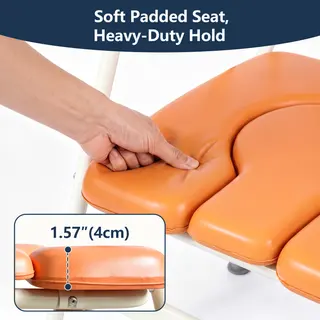
YMX6108K
Multi-angle reclining backrest, wide-stance frame, second bucket included
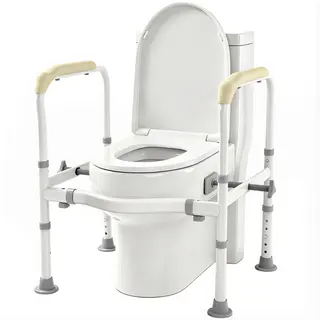
YMX1106-S
Height- and width-adjustable rail on a 304 stainless frame, 500 lb rated, 8 load-bearing points
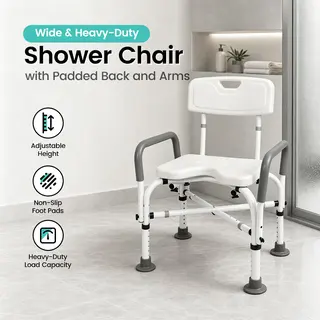
YMX5109-S
Wide heavy-duty shower chair with padded back and arms, 5-level height adjustment and a 350 kg load rating
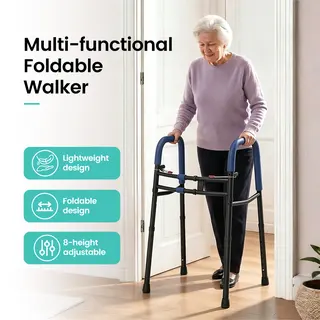
LM2001-S
Multi-functional folding walker with 8-level height adjustment, aluminium frame and a 150 kg load rating
Related notes
Price this against your market
Send the category, the market and the quantity band. We reply with material options, MOQ per SKU, lead time and the certificates your market needs.