DDP Mobility Aids Supplier: What Your Price Covers
A DDP quote hides four cost lines beyond unit price — duty basis, cargo insurance, final-mile accessorials and destination storage. What to ask for in writing.
What this note covers
A DDP quote hides four cost lines beyond unit price — duty basis, cargo insurance, final-mile accessorials and destination storage. What to ask for in writing.
Covers: DDP mobility aids supplier · delivered duty paid rehab equipment · landed cost assistive devices · DDP vs FOB mobility aids · import duty commode chairs
Key figures at a glance
A DDP quote from a mobility aids supplier arrives as a single number, and that is exactly why buyers get caught by it. Delivered duty paid means the seller clears the goods for import and pays the duty — under Incoterms 2020 it is the only term that puts import clearance on the seller — but the term does not fix what sits inside the number. Four cost lines travel inside a DDP price. Most quotes show you one of them.
What follows is the structure of a DDP landed cost on bathroom-safety and mobility products, the line buyers most often fail to see, and the six items to demand on paper before you compare two suppliers.
What DDP obliges, before you compare two numbers
Under Incoterms 2020, DDP means the seller delivers the goods cleared for import, on the arriving means of transport, ready for unloading at the named place. The seller carries every cost and risk up to that point: export clearance, main carriage, import clearance, duty, and any transit charges inside the destination country.
Two words in that sentence do all the commercial work.
Named place. “DDP Los Angeles” and “DDP your door in Ohio” are not the same product. We quote delivery to a door in three US zones — West, Central and East — because the domestic leg, not the ocean leg, is what moves the total. A delivery ZIP outside the zone you were quoted re-prices the whole shipment, which is why an enquiry that says only “USA” gets an answer that later changes.
Cleared for import. That is a duty and a customs entry. It is not a tax. In the EU and the UK, import VAT is a separate line from duty, and it is the single most common gap between what a buyer hears (“DDP, all in”) and what the carrier invoices at the door. If you resell through a VAT-registered entity, the VAT is recoverable — but only if someone can reclaim it, and a supplier with no establishment in your country often cannot.
The duty line is a classification question, not a percentage
Duty is assessed on two things: the classification of the goods and the customs value of the entry. Neither is visible in a unit price.
Mobility and bathroom-safety products do not sit under one heading. Canes, crutches, walking frames and bathroom seating commonly resolve to different headings, and the rate follows the heading rather than the invoice total. On a $2,000 mixed trial order covering commode chairs, shower chairs and a cane or crutch line, you may be filing several classifications against one commercial invoice.
That is where a DDP quote quietly fails. If a supplier priced duty off one blended rate on the whole invoice, the entry is filed per classification and one SKU turns out to carry more than was assumed. The difference reappears either as a surcharge after the deposit or as a thinner margin than the one you modelled. Neither is a scam; both are the result of nobody writing the code down.
Three questions close this:
- Which heading applies to each SKU? A supplier who ships this range regularly knows its own classifications and can put them in a table.
- What is the customs value basis? Goods value alone, or goods plus freight and insurance? The second produces a higher duty base on the same invoice.
- Is the quote duty-inclusive or duty-reimbursable? “Duty included” and “duty at actuals, recharged” are both legitimate; confusing them is not.
One current caution for the US: de minimis treatment for China-origin goods changed during 2025. Do not plan a first shipment on the assumption that a small parcel enters duty-free. Confirm the treatment for your specific entry before you set a retail price from it.
Cargo insurance is not part of the DDP definition
This surprises buyers more than any other line. Incoterms 2020 obliges the seller to take out insurance only under CIF and CIP. Under DDP the seller must contract carriage — but is under no obligation to insure the cargo. A DDP quote can therefore be entirely uninsured and still be perfectly compliant with the term.
On a $2,000 trial that sounds like a rounding error, until you consider what the cartons contain. Bathroom seating arrives as tube frames and molded seats; a forklift puncture or a crushed pallet at the destination terminal is a total loss on that SKU, and the freight invoice does not care.
Ask for a certificate, not an assurance:
- All-risk cover, not a named-perils policy that excludes handling damage.
- 110% of invoice value, which is the level CIF buyers normally work to.
- A named certificate holder — you or your forwarder, not “the seller’s policy” with no document attached.
If a supplier declines to insure a small order, that is a cost signal worth knowing: it tells you the shipment is priced at the edge, and it tells you who absorbs the loss if the pallet arrives bent.
Final-mile accessorials decide whether the number survives delivery
“DDP to your door” is where quotes diverge most, because the definition of door is doing the work.
The same pallet costs different amounts depending on the site it goes to. A loading dock with a forklift is the cheapest delivery in freight. A residential address with no dock needs a liftgate. A site that requires an appointment needs a booking. Inside delivery means the driver does not stop at the kerb. A failed attempt costs a re-delivery. In the US, a limited-access site — a care home, a clinic, a storage unit — is priced as its own category.
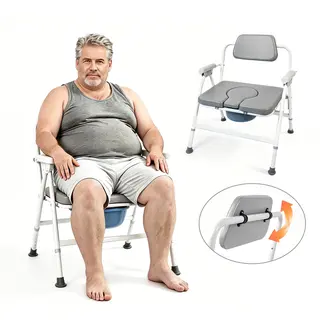
Carton size decides which of these apply. A bariatric commode chair with a wide-stance frame does not travel in the same carton as a toilet rail; past a certain carton dimension you leave parcel networks and enter LTL freight, where accessorials are itemised. On a mixed first order, part of your shipment may be parcel and part may be pallet — and a quote prepared on one assumption will be right for half the cartons.
So write the site, not the country, into the enquiry: address, whether there is a dock, whether a forklift is on site, whether the receiver can accept a pallet, and the delivery window. That single paragraph removes more post-quote surprises than any negotiation on unit price.
Destination storage and detention: the line almost nobody quotes
This is the line buyers miss, and it is missed for a structural reason: it appears only when something on the buyer’s side is not ready.
Every inbound shipment has free time at the destination terminal or warehouse. After it expires, storage accrues per container or per pallet per day. Under DDP the consignee of record is normally the seller, so the charge lands on the seller first — and comes back to you as a surcharge, a requote, or a supplier who quietly stops offering DDP on your lane.
The triggers are almost never the factory:
- Your warehouse cannot take the pallet on the day it arrives, so it sits.
- An FBA appointment moves. If the goods are going to a fulfillment center, the delivery window in the shipment plan is the clock, and it moves more often than buyers expect. The packaging side of that is covered in our note on FBA packaging for assistive devices.
- An import number or bond arrives late, so the entry cannot be filed on landing.
- A customs query on classification holds the container while someone finds the technical file — which is why the HTS table from the previous section is a schedule item, not paperwork.
Two questions prevent most of it: what free time does the quote assume, and what is the daily charge after it? Then: whose bond and whose importer number are on the entry? That last one matters because whoever appears on the entry is the party who can actually fix a hold. A DDP shipment where you cannot see that name is a shipment you cannot rescue.
Where the $2,000 order fits into the arithmetic
Our minimum is $2,000 of order value and models can be mixed; production runs 7–10 days from artwork and sample sign-off, and samples run 7 days. Payment is T/T or Trade Assurance. Those are also the terms on our MOQ and pricing page, so the numbers do not change between a page and an invoice.
The reason a small mixed order belongs in a DDP conversation is that fixed costs dominate it. Customs entry, a bond, minimum freight and a domestic leg are per-shipment charges, not per-unit ones. At $2,000 they are spread over the fewest units they will ever be spread over — which makes the landed cost at this size your ceiling rather than your target. If the DDP number works on a trial order, it will work at volume. If it only works at volume, you have learned that before you committed a container.
What travels with the goods at that size is the same documentation as at container scale: ISO 13485 certificate 8623138319, valid to 18 Jun 2028, held under unified social credit code 91442000MA4W51H52M; ISO 9001 certificate 8629985173 with the same validity; US FDA establishment registration 3014264913, owner / operator number 10056711, renewed 15 Sep 2025; and CE certificate FCS202503711CA01 under the EMC Directive 2014/30/EU, which names the LM4904 walking-stick series and therefore does not travel to a different series. All of them are on the certifications page with the issuing bodies’ registers, and how to read the scope lines is set out in ISO 13485 vs ISO 9001.
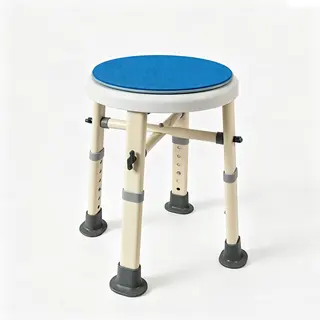
The six lines we build — commode chairs, shower chairs, bath benches, toilet safety rails, canes and crutches, walkers and rollators — are non-powered, which is why the EMC document names one series rather than the range. It also means the compliance burden on a mixed order sits with labeling, the technical file per SKU, and the entry itself, not with electrical approvals. That is a simplification for you, and it is the reason a mixed pallet is practical at this size: one entry, several headings, one delivery.
What a DDP quote should show on one page
Six items. If a quote cannot answer them, the unit price is not yet comparable to anything.
| Item | What good looks like | Why it matters |
|---|---|---|
| Named place | Street address, site type, inland zone | The domestic leg drives the total |
| Classification | HTS heading per SKU | Duty follows the heading, not the invoice |
| Tax split | Duty and import VAT shown separately | VAT is a different line, sometimes not recoverable |
| Insurance | All-risk certificate at 110%, named holder | DDP carries no insurance obligation |
| Accessorials | Dock, liftgate, appointment, inside delivery, stated | Carton size decides which apply |
| Time | Free days at destination, daily rate after, who pays | The charge appears only when your side is late |
Read it in that order and you will notice something about how these quotes usually fail. The unit price, the one number every supplier gives you immediately, is the only line that is already comparable. Everything else — duty basis, tax treatment, insurance, the domestic leg, free time — is decided in the enquiry, not in the negotiation.
So the judgment framework is short. Name the place, classify the SKUs, split the tax, ask for a certificate, describe the site, and ask what free time assumes. A supplier who answers all six has priced your shipment; one who answers with a total has priced a total. The cheapest DDP number is not the one that wins the comparison — it is the one that does not move between the quote and the delivery.
Frequently asked questions
- What does DDP actually include?
- Under Incoterms 2020, delivered duty paid means the seller clears the goods for import, pays duty and delivers to the named place. It covers export clearance, main carriage, import clearance and duty. It does not automatically cover cargo insurance, import VAT or GST, or charges that start after the goods sit too long at destination — those depend on what the quote says, not on the three letters.
- Is cargo insurance included in a DDP price?
- Not by definition. Incoterms 2020 only obliges the seller to insure under CIF and CIP. Under DDP the seller must arrange carriage but is under no obligation to insure the goods, so a DDP quote can be entirely uninsured. Ask for an all-risk certificate at 110% of invoice value and check whose name is on it.
- Who pays if the shipment sits at the port?
- Whoever is the consignee of record. Under DDP that is normally the seller, which is why the charge comes back to you as a surcharge on the next invoice. The trigger is usually on the buyer's side — a warehouse that cannot take a pallet, a moving FBA appointment, or an import number supplied late. Ask what free time the quote assumes and what the daily rate is after it.
- Do I pay import VAT under DDP?
- Usually not at the door, but check whether the quote says duty or duty and tax. Many DDP prices cover duty and stop there; import VAT or GST is then billed to the consignee by the carrier. If the seller is not established in your country, recovering that VAT can need a fiscal representative, which is exactly why some quotes quietly exclude it.
What to fix before you request a quote
Compare DDP quotes on the named place, the HTS line per SKU, the duty/VAT split, the insurance certificate, the delivery address type and the free time at destination — because the unit price is the only line every quote already shows you.
How to apply this to your order
- Write the exact delivery address and site type into the enquiry, not the country. A pallet to a dock and cartons to a third-floor flat are different products with different accessorials.
- Ask for the HTS heading per SKU and the customs value basis in writing before you compare two DDP numbers, so you are comparing duty assumptions and not just totals.
- Ask one question about free time and one about insurance — who holds the certificate, and who pays the daily charge after free time ends.
- Run the first shipment at the $2,000 mixed minimum and treat the landed cost as your ceiling, not your target: fixed per-shipment charges weigh most at that size.
Where these figures come from
- Incoterms 2020 rules — DDP obligations, insurance obligation only under CIF and CIP International Chamber of Commerce checked 2026-10-27
- US duty assessment on the HTS classification and customs value of the entry US Customs and Border Protection checked 2026-10-27
- Certificate numbers, validity dates and lead times Jinda Rehab Care company records — ISO 9001 8629985173, ISO 13485 8623138319, FDA 3014264913, CE FCS202503711CA01 checked 2026-10-27
Models this note applies to

Related notes
Price this against your market
Send the category, the market and the quantity band. We reply with material options, MOQ per SKU, lead time and the certificates your market needs.