$2,000 Trial Order: The Real Timeline From RFQ to Container
A $2,000 mixed trial order takes about six weeks door to door, but only 7–10 days is production. Here is where the other five weeks actually sit.
What this note covers
A $2,000 mixed trial order takes about six weeks door to door, but only 7–10 days is production. Here is where the other five weeks actually sit.
Covers: rehab equipment trial order timeline · how long does a mobility aids order take · RFQ to container timeline · mobility aids supplier lead time · mixed model trial order shipping · assistive devices first order schedule
Key figures at a glance
A $2,000 mixed trial order from a Chinese rehab factory takes roughly six weeks from first email to container, and only 7–10 days of it is production. That single sentence is the most useful thing a first-time buyer can know about a trial order timeline, because it moves the planning argument away from “how fast can the factory work” and onto the four or five weeks that the buyer and the carrier control.
The number is not a promise of speed. It is a decomposition. Once you know which weeks belong to whom, you can shorten the ones that are yours and stop paying expedite fees to shorten the ones that are already short.
The factory block is the shortest one on the calendar
Production on a $2,000 order is quoted at 7–10 days, and the same 7–10 days applies to a repeat order. That is the whole manufacturing window: cut, form, weld, powder coat, assemble, pack. On a mixed order of six models in a commode chair and shower chair programme, the work is sequenced rather than run in parallel, which is why the first two days of the window are usually changeover days and not assembly days.
Two things stretch that block, and neither of them is labour.
The first is artwork. A printed carton cannot be packed before it exists, and it cannot be printed before a proof is signed. If the proof sits in an inbox for nine days, the production clock has not started, even though the purchase order is dated and the deposit has cleared. Put the proof deadline in the PO with a name next to it.
The second is colour batching. A model offered in one colour runs as one batch. Add a second colour on a small order and you have added a changeover, which is the subject of why small trial orders are priced by changeovers rather than units. It is not a reason to avoid colour — it is a reason to group colours deliberately instead of letting six models arrive as six unrelated colours.
Everything else in the factory is fast. Sourcing tube, laser cutting without a dedicated die, in-house injection moulding for the seat and bucket parts — those are the reasons a $2,000 order can be scheduled at all, since a tooling-based process would be quoted at a minimum quantity in the thousands.
Days 1–3: the RFQ that comes back as a document
Most first RFQs produce a number and nothing else, and then three more email rounds to get the details that decide whether the number is usable. The question you want answered on day three is not “what is the price” but “what does one page contain”.
Ask for six things in the first email: unit price by model, carton dimensions, gross weight per carton, CBM per model, production lead time from artwork approval, and the validity date of the quote. With those six, you can price freight yourself before you commit, which is the difference between a quote and a decision.
The order value minimum is $2,000, measured on order value and not on pieces per model. That is what allows a mixed first order across categories — a flip-back commode chair such as the YMX6108K, a toilet safety rail with an 18.2–28.1 inch height range over a 23.4–25 inch width and a 500 lb rating, a wide heavy-duty shower chair rated to 350 kg on a 43 × 33 cm seat, and a carbon fibre LED cane at 350 g — without any one line reaching a container on its own.
Ask also, on day one, which certificates travel with the shipment. For this factory the answer is specific rather than generic: ISO 13485 8623138319 and ISO 9001 8629985173, both valid to 18 June 2028; FDA establishment registration 3014264913, renewed 15 September 2025 under owner/operator number 10056711; a TÜV Rheinland verified supplier assessment, 473547481_P+T, valid 11 June 2025 to 10 June 2026; and an EU registered Community design, 015131494-0001. The certifications page carries the same numbers with the issuing bodies, which is what a tender or a retailer’s compliance team will ask you to evidence.
Days 3–10: the sample is a run, not a favour
A seven-day sample lead time is only credible if the sample is scheduled as its own small production run. If it is instead cut from whatever is left over from a bulk run, the sample date slides whenever the bulk schedule moves — and in the first quarter of a relationship, it always moves.
The practical consequence for a buyer: order the sample in the same week you request the quote, not after the quote is approved. The two tracks do not conflict. While the sample is being built you are negotiating price, checking carton dimensions against your own storage racking, and deciding whether the retail packaging carries your brand or the factory’s.
Use the sample for the four checks that a photograph cannot answer: seat height range against your actual customer, the fold or recline mechanism under one hand, the foot pad on a wet tile, and whether the carton survives your own courier’s handling. Seat height is the specification buyers get wrong most often — 53.5–60 cm on a wood-grain shower chair and 63.4–72.2 cm on a folding shower chair are different products for different customers, and neither is “standard”.
Days 10–24: production, and the two approvals that stop it
Once artwork is signed, the 7–10 day window runs. In practice the calendar looks like this: changeover and cutting in the first two days, forming and welding next, coating and curing after that, then assembly, function check and packing.
Two approvals can stop it mid-flight. Packaging artwork that arrives late is one. The other is a specification change made after cutting — a different seat colour, a different foot pad, an extra bucket. On a large order a change is absorbed; on a $2,000 order it usually means the affected models are re-cut and everything behind them waits.
This is the point where buyers most often ask for an inspection. Book it on the day the deposit goes out. A third-party inspector needs two to four working days’ notice in most Chinese industrial zones, and a booking made after production ends pushes the container date by a week without anyone having made a mistake.
Days 24–31: carton maths decides the container, not unit count
A 40HQ carries roughly 76 m³ of usable volume and a 20GP around 33 m³, before you account for pallets, dunnage and the fact that no one loads to the roof. Those are standard ocean-freight figures, not a claim about any one product.
What follows from them is the part buyers underestimate: a $2,000 order is a volume problem, not a unit problem. Thirty commode chairs and thirty folding canes are nowhere near the same cube. If your plan is to grow the trial order into a full container, choose the mix by carton volume and stacking strength — commode chairs stack and crush differently from a box of canes, and a mixed container loaded without that in mind arrives with deformed cartons and a returns problem before the product is even sold.
Get the packing list before the container is sealed, with carton count, dimensions, gross weight and CBM per model. It is also the document your freight forwarder needs to quote, and the document your own warehouse needs to plan labour.
Days 31–45: booking, cut-off and the variable you do not control
Space booking, cut-off and sailing are the buyer’s side of the fence, or the forwarder’s. On the standard Incoterms split, FOB hands the goods over at the port of loading and the buyer owns the ocean leg; DDP keeps it with the supplier but does not make the vessel sail faster.
Three dates matter and they are usually not the same date: the container gate-in or cut-off at the port, the vessel departure, and the arrival plus clearance at destination. A one-week slip in booking does not cost one week — it costs the next sailing, which on some lanes is seven days and on others fourteen.
A calendar you can defend in a planning meeting
Build the trial order backwards from the date you want stock on the shelf. Subtract customs clearance and inland delivery. Subtract the sailing. Subtract a week of buffer nobody will admit is needed. That is your cut-off. Subtract inspection notice, subtract the 7–10 production days, subtract proofing, and you have the date the artwork must be approved. Everything earlier than that is quoting and sampling.
Written that way, the timeline becomes a document with five dated milestones rather than an optimistic number at the bottom of a quotation. It also makes the first conversation with a new supplier much shorter, because you are no longer asking how fast they are — you are asking which of those five dates they can hold, and which ones are yours.
If you want the quote and the packing data in one exchange instead of four, start from the MOQ and pricing terms, then send the model list. The first reply should be a page you can hand to your own freight forwarder without editing it.
Frequently asked questions
- How long does a $2,000 trial order take from first email to my warehouse?
- Plan six to eight weeks door to door for a sea shipment, and about two weeks of that is the factory. Production is 7–10 days once artwork is approved; a 7-day sample can run in parallel with quoting. The remaining four to six weeks is quotation turnaround, artwork proofing, inspection booking, space booking and the sailing itself. Any supplier who promises “two weeks total” is quoting production only.
- Why does the clock start at artwork approval and not at the purchase order?
- Because a printed carton or manual cannot go on press until someone signs off the proof, and a carton cannot be packed until it exists. If the proof is still in your inbox on day nine, the seven-to-ten-day production window has not begun. Ask for the proof on day one, not after the deposit clears.
- Can I load a $2,000 order as a full container?
- Usually not, and that is fine. $2,000 of commode chairs, shower chairs or canes typically fills a fraction of a 40HQ, so it moves as LCL or is consolidated. If you need a full container, the order value is set by carton volume rather than by unit count, and the model mix has to be chosen from what stacks and crushes safely.
- What documents should arrive before the container is sealed?
- A packing list with carton count, dimensions, gross weight and CBM per model; the commercial invoice; the certificate of origin if your import regime needs one; and copies of the quality certificates you intend to show your own customer — for this factory, ISO 13485 8623138319, ISO 9001 8629985173, FDA establishment registration 3014264913 and, for the LM4904 cane series only, CE EMC report FCS202503711CA01.
What to fix before you request a quote
Budget six weeks, not two: the factory’s 7–10 days is the shortest block on the calendar. The weeks you can actually compress are the ones you control — proofing, payment, and booking.
How to apply this to your order
- Put the artwork proof deadline in the purchase order, dated, with the name of the person who signs it.
- Send the model list with target quantities per model before asking for a price, so the quote comes back as one document instead of three rounds of email.
- Ask for carton dimensions, gross weight and CBM per model with the quotation — you need them to price freight before you commit.
- Book inspection and vessel space on the same day the deposit goes out, not after production finishes.
Models this note applies to
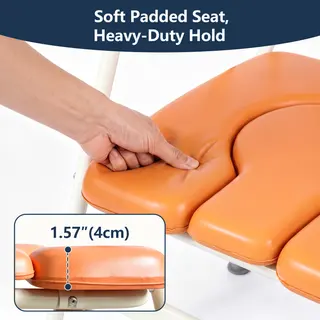
YMX6108K
Multi-angle reclining backrest, wide-stance frame, second bucket included
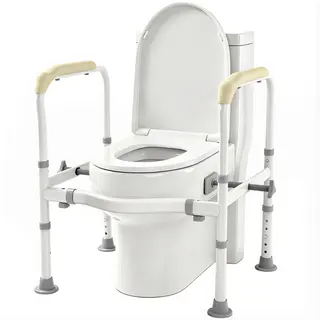
YMX1106-S
Height- and width-adjustable rail on a 304 stainless frame, 500 lb rated, 8 load-bearing points
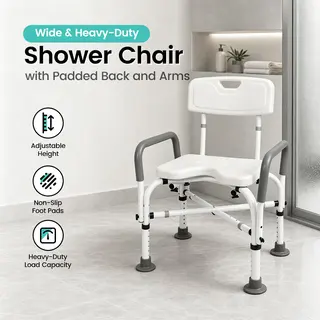
YMX5109-S
Wide heavy-duty shower chair with padded back and arms, 5-level height adjustment and a 350 kg load rating
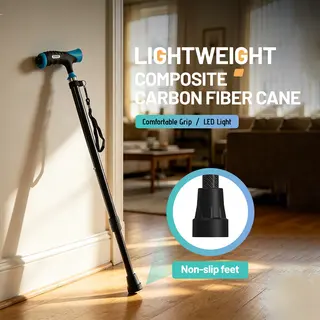
LM4904
Carbon fibre cane with a built-in LED light in the handle, dual-handle support and 10-level height adjustment
Related notes
Price this against your market
Send the category, the market and the quantity band. We reply with material options, MOQ per SKU, lead time and the certificates your market needs.