Rehab Equipment Tender Supplier: 9 Documents Audited
What a care home or tender panel audits before approving a supplier: certificate numbers, scope, validity, batch records, and the mismatches that fail the file.
What this note covers
What a care home or tender panel audits before approving a supplier: certificate numbers, scope, validity, batch records, and the mismatches that fail the file.
Covers: rehab equipment tender supplier · care home procurement assistive devices · mobility aids tender documents · ISO 13485 supplier audit · assistive devices batch records
Key figures at a glance
If you are shortlisting a rehab equipment tender supplier, the decision is rarely made on the price sheet. Care home procurement for assistive devices runs on a document pack, and the pack is read against itself: nine items, cross-checked for number, scope, holder, validity and lot. The certificate scans are the easy part. Files fail on the mismatches between them.
This is what a tender panel or a care home group’s procurement lead actually opens, in the order they open it, and where compliant suppliers still lose points.
The nine documents a care home procurement team opens first
Public tenders and private care home groups use different scoring sheets, but the underlying list converges on the same nine items:
- Quality system certificates — ISO 9001 for the factory, and ISO 13485 where the product is a medical device rather than a general consumer good.
- Regulatory registration or listing — US FDA establishment registration and device listing, or an EU declaration of conformity with the technical file held.
- Test reports behind the performance claims — static load, cycle testing, salt-spray or corrosion, and the lab that ran them.
- Material declarations — restricted substances, and for anything with fabric or coating, the relevant declaration rather than a generic statement.
- One sample batch record — the traceability document, covered further down.
- Warranty and spare parts statement — what is covered, for how long, and for how many years parts remain available.
- Product liability cover — at the limit the buyer’s own risk team specifies. That number is a buyer-side figure; no supplier should be quoting you theirs as if it were a standard.
- Onsite audit report — a third-party assessment if one exists, because it substitutes for a site visit the panel cannot make.
- Commercial annex — incoterm, named place, MOQ, lead time and the delivery address type.
Items 1 to 3 are where the scoring is actually decided, because they are the only ones a panel can verify without trusting you. Our full certificate list with numbers and registers is on the certifications page, and it is deliberately laid out so a procurement officer can resolve each number independently.
Certificate numbers, not certificate pictures
A tender panel does not need your PDF. It needs a number it can look up.
Two numbers carry most of the weight in an assistive device file. ISO 9001 is registered as 8629985173 under GB/T 19001-2016 / ISO 9001:2015. ISO 13485 — the medical device quality management standard, which is a different question from a general factory certificate — is registered as 8623138319 under GB/T 42061-2022 / ISO 13485:2016. Both are held under unified social credit code 91442000MA4W51H52M and both run to 18 June 2028. Both can be checked on the issuing body’s register at chineseiso.org without asking the supplier for anything.
Three things go wrong here more often than any others:
- The holder name does not match the contracting entity. The certificate is issued to a legal name; the purchase order is raised to whatever name sits in the buyer’s vendor master. If they differ, attach a one-page explanation that maps the trading name to the legal entity — not a verbal assurance.
- The scope does not cover the product you quoted. A quality certificate is issued against a scope of activity. Read the scope sentence and check it names the product category you are being scored on. A certificate covering one product family does not automatically cover another.
- The validity window does not reach the end of the contract. This is the one that gets flagged at annual review rather than at award.
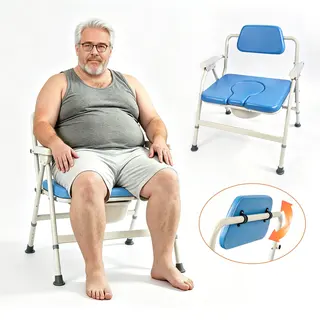
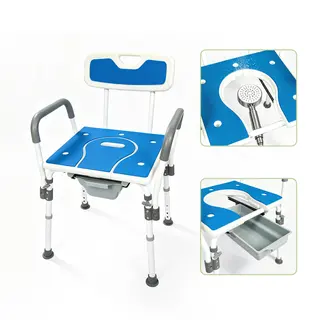
The difference between the two standards matters more than buyers expect: ISO 9001 says the factory runs a controlled quality system, ISO 13485 says it runs one suitable for medical devices, with design control, risk management and traceability requirements attached. A care home buying commode chairs and shower chairs is buying devices; a file with only ISO 9001 is thinner than one with both. The comparison of what each standard actually forces a factory to document is set out in ISO 13485 vs ISO 9001.
FDA registration is not FDA clearance — the mismatch that sinks a rehab equipment bid
A US-facing tender will ask for FDA status, and this is where suppliers overstate and lose credibility in the same sentence.
Establishment registration and device listing mean the facility and the device are on file. Ours is registration 3014264913, owner/operator number 10056711, renewed 15 September 2025. That is verifiable on the FDA’s own registration and listing database in under a minute.
What it is not: a clearance, and not an approval. Those are separate pathways. Many Class I physical-medicine devices — canes, crutches, walkers, commode chairs, shower chairs among them — sit in categories the FDA treats as exempt from premarket notification, which is precisely why registration and listing are the entire requirement for those products. The trap is that “exempt” is a category-by-category determination, and the buyer’s compliance officer knows it. A supplier who writes “FDA approved” on a bid document has just told that officer the file cannot be trusted.
The correct sentence is dull and it wins points: registered and listed, exempt category, listing number and renewal date attached. If your supplier cannot produce the listing entry, the registration number alone is half a document.
What a CE certificate for assistive devices actually covers
The same overstatement happens with CE, and in Europe it is more expensive.
Our CE documentation is issued under EMC Directive 2014/30/EU, certificate FCS202503711CA01, with test report FCS202503711E01 from Dongguan Funas Testing Technology Co., Ltd. The tested standards are EN IEC 55014-1:2021, EN 61000-4-2:2008 and EN IEC 61000-4-3:2020.
That certificate says the product’s electromagnetic behaviour is within limits. It does not say the product is a compliant medical device under the MDR. Those are different routes with different obligations.
A care home group or public health buyer in the EU will normally want the medical device route: technical documentation, a declaration of conformity, UDI and EUDAMED registration, and an authorised representative established in the EU. For Class I devices that do not measure and are not sterile, self-declaration is available — but the technical file still has to exist and the representative still has to be appointed.
So a supplier sending an EMC certificate as a substitute for MDR documentation is not being generous with paperwork. It is telling the panel that either the file does not exist or the supplier does not know which directive applies. Both readings cost the bid. Ask which route the tender is scoring before you assemble anything.
Batch records and traceability — the document that decides repeat orders
Tender scoring gets the supplier onto the list. The batch record decides whether you stay on it after the first complaint.
A usable batch record for one production lot carries: the lot code as it appears on the carton and on the unit, production date, quantity, the line it ran on, the operator or shift, the raw material batch numbers that went in, the in-process checks, the sampling plan and result at final inspection, and the retention sample location.
Why procurement asks for it: it is the only document that connects a defective unit to a specific run and a specific material delivery. Without it, a warranty claim becomes a negotiation about whether the fault exists. With it, the supplier can pull the retention sample and answer in a day.
For welded and moulded frames — commode chairs, shower chairs, walkers — the material batch matters more than the assembly date, because tubing and resin deliveries vary between lots. For products with a coating or a soft component, the coating batch and the fabric roll matter the same way.
Two commercial clauses attach to this document and should be read together with it: a 12-month warranty against manufacturing defects, and a written statement of how many years spare parts remain available. A care home group replacing 200 units a year cannot use a supplier who discontinues the seat mould in eighteen months. Our commode chair range and shower chair range are built on shared mould families for exactly this reason, and the parts position is set out per category.
The four mismatches that fail an otherwise compliant file
Most rejected files contain every required document. They fail because the documents disagree with each other.
- Name mismatch. Certificate holder, invoice entity and vendor master entry are three different strings. Map them once, in writing, and attach the mapping to every bid.
- Scope mismatch. The quality certificate’s scope sentence does not name the product category being quoted, or the regulatory document covers a different product family from the one on the price sheet.
- Validity mismatch. Certificate expiry falls before the framework term ends, or the audit report is older than the panel’s stated maximum age — commonly twelve or twenty-four months, and stated in the tender pack even when nobody reads it aloud.
- Commercial mismatch. The incoterm and named place in the annex do not match the quote, or the MOQ is expressed in a unit the buyer’s system cannot process. Our MOQ is a $2,000 order value with models mixed in one shipment, not a per-SKU carton count, which is what most care home groups need for a first order across several product lines — the MOQ and pricing page states the same figure the quote will carry.
One more, less obvious: packaging and labelling. A care home group with a central warehouse needs carton marks, barcodes and label content that match its receiving system. A tender that passes on compliance can still fail at goods-in for a missing label field.
How to assemble the file before the tender closes
Work backwards from the closing date rather than forwards from your brochure.
Start with the checklist. Ask the procurement contact to send the scoring sheet or the document list, and read the weighting — a pack that scores 60% on price behaves nothing like one that scores 40% on compliance and references.
Then resolve every number yourself. Certificate numbers on the issuing register, registration numbers on the regulator’s database, test report numbers with the laboratory. Anything that does not resolve comes out of the pack, because a compliance officer will check the same three fields and a dead number is worse than a missing one.
Then pull one real batch record for the exact SKU you are quoting and read it as if you were the auditor. If the lot code on the record does not match the lot code format on the carton, that is the finding.
Then match validity to contract term, and attach a surveillance schedule where the two do not line up.
Finally, size the first order so the file is tested against a real shipment rather than a promise. A $2,000 mixed trial with 7–10 days from sign-off to dispatch is small enough to run while the tender is still open, and it produces the packing list, the lot coding and the inspection record that the panel will ask for at the second stage anyway. A supplier who can be tested at that size before a framework contract is signed is a different risk from one who only exists on paper.
The companies that win care home and tender business are rarely the cheapest per unit. They are the ones whose nine documents agree with each other, whose numbers resolve in a minute, and whose lot codes match the carton.
Frequently asked questions
- What documents should a care home ask a mobility aid supplier for?
- Eight, in this order: the quality system certificate numbers (ISO 9001, and ISO 13485 if the product is a medical device), the registration or listing behind any regulatory claim (US FDA establishment registration, or an EU declaration of conformity), the test reports behind the load and durability claims, material declarations for restricted substances, one sample batch record showing lot traceability, a warranty and spare parts statement, product liability cover at the buyer's required limit, and a third-party onsite audit report if one exists.
- Does FDA registration mean a product is FDA approved?
- No. Establishment registration and device listing mean the facility and the device are on file with the FDA. They are not a clearance and not an approval. For many Class I physical-medicine devices the product falls in an exempt category, so registration and listing are the whole requirement — but the buyer has to see the listing entry to know that, not a certificate with a stamp on it.
- Is a CE EMC certificate enough for an EU care home tender?
- Usually not. An EMC certificate under Directive 2014/30/EU proves electromagnetic compatibility. A care home or public tender in the EU normally asks for the medical device route instead: technical documentation under MDR, a declaration of conformity, UDI and EUDAMED registration, and an authorised representative established in the EU. A supplier who sends an EMC certificate as if it were MDR clearance gets marked down, not approved.
- How long do certificates need to stay valid through a framework contract?
- Match the certificate validity window to the contract term plus the review period. A three-year framework signed in 2026 needs certificate coverage into 2029 or a written surveillance-audit schedule that shows how the certificate is maintained. Certificates that expire mid-contract are the most common reason a compliant file still gets flagged at the annual review.
- What is a batch record and why does procurement ask for it?
- A batch record is the paper trail for one production lot: date, quantity, line, operator, the raw material batch numbers that went in, in-process checks, and the sampling plan used at final inspection. Procurement asks for it because it is the only document that shows the supplier can trace a defective unit back to a specific run and a specific material delivery — which is what a recall or a warranty claim depends on.
What to fix before you request a quote
A tender panel scores the file, not the factory tour. Nine documents that agree with each other — number, scope, holder, validity, lot — beat a thicker folder of scans that do not.
How to apply this to your order
- Ask the procurement contact for the document checklist in writing before you reply. Most care home groups score against a fixed list, and sending the wrong eight documents costs a week you do not have.
- Resolve every certificate number yourself on the issuing body's register before you forward it. If the number does not return a hit, the buyer's compliance officer will find that out and it reads worse than not supplying it.
- Pull one real batch record for the SKU you are quoting and check it carries lot code, date, line, material batches and the sampling plan. If it does not exist, the traceability claim in your tender response is not supportable.
- Line up the validity windows against the contract term. A framework that runs past the certificate expiry date needs a surveillance-audit schedule attached, not a promise.
Where these figures come from
- Certificate numbers, scopes and validity dates Jinda Rehab Care company records — ISO 9001 8629985173, ISO 13485 8623138319, CE FCS202503711CA01, FDA 3014264913 checked 2026-10-31
- Incoterms 2020 delivery and clearance obligations International Chamber of Commerce checked 2026-10-31
- EU medical device regulation — technical documentation and authorised representative duties Regulation (EU) 2017/745 checked 2026-10-31
Models this note applies to
Related notes
Price this against your market
Send the category, the market and the quantity band. We reply with material options, MOQ per SKU, lead time and the certificates your market needs.