Importing Mobility Aids to the US: FDA, Labels and States
Establishment registration, 510(k) status, UDI and English labelling, then state rules — the file a US buyer should hold before the first container lands.
What this note covers
Establishment registration, 510(k) status, UDI and English labelling, then state rules — the file a US buyer should hold before the first container lands.
Covers: importing mobility aids to the US · FDA establishment registration mobility aids · medical device labeling requirements 21 CFR 801 · UDI GUDID class I device · state DME license requirements · rehab equipment import compliance
Key figures at a glance
If you are importing mobility aids to the US — canes, crutches, walkers, commode chairs, bath benches — the compliance question is narrower than most suppliers make it sound, and wider than most buyers assume. There is no approval certificate to hang on the wall. There is a registration, a listing, a quality system, a label, and a set of state rules that sit underneath all of it. Four federal items, one carton, and a decision you make about how you sell.
This guide walks the file in the order a US buyer actually encounters it: what the FDA does and does not do with a walking aid, what has to be printed on the box, where the UDI question lands for Class I products, why the quality certificate is now doing double duty, and which state-level requirements turn a simple import into a licensing project.
FDA establishment registration is a filing, not an approval
The single most common misreading in this category is treating a registration number as a product approval. It is not one. FDA registers establishments and lists devices; it does not certify that a commode chair is good. A registration number means the facility is on file and pays its annual fee. A listing number means the specific product is attached to that facility in the agency’s database.
Three practical consequences follow.
First, registration is annual and the window is fixed: establishments renew between 1 October and 31 December each year, and the fee is charged per establishment, not per SKU. A supplier with a registration number that lapsed two renewal cycles ago is not currently registered, whatever the certificate PDF says. Check the number against the agency’s public database rather than accepting a scan.
Second, a foreign establishment has to name a US agent — a person or firm resident in the United States who is the agency’s point of contact — and that obligation is on the factory, not on you. If a supplier cannot name its agent, the registration is probably not being maintained in a form the agency can act on.
Third, and this is the part buyers underuse: the registration number is a traceable identifier you can put in your own procurement file. On our file the establishment registration is 3014264913, owner / operator number 10056711, renewed 15 September 2025. Those numbers are checkable. A supplier who cannot give you a number that resolves in the database is asking you to take a claim on trust.
The 510(k) question, answered in one sentence
Most of this product category does not need premarket clearance. Canes, crutches, walkers, commode chairs and bath benches sit predominantly in Class I under the physical medicine device regulations, and the majority of Class I devices in that group are 510(k)-exempt.
Exempt is a word that gets misread in both directions. It does not mean unregulated. It means exempt from premarket notification only — the requirement to file and wait for clearance before marketing. Everything else still applies in full: registration, listing, labelling, medical device reporting when something goes wrong, unique device identification where not exempted, and a quality system that the agency can inspect.
So the correct question to a supplier is not “is this FDA approved”. It is: which regulation does this product sit under, and is it 510(k)-exempt or does it have a clearance number? A supplier who can answer that in one line knows the category. A supplier who answers “yes, FDA” has not understood the question.
There is a second-order risk here that costs buyers real money. Because the products are Class I and exempt, some sellers assume nothing is checkable, and the marketing drifts: “FDA approved”, “CE certified” for a product with no CE file, “ISO certified” without a number. Those are the phrases that get a listing taken down and, in a competitive category, screenshotted by the other side.
The label is where containers actually stop
Registration problems are paperwork. Label problems are physical: a container arrives, the carton is wrong, and you cannot fix it at the port without paying for it.
Four elements carry almost all of the risk.
Name and place of business. The label has to identify the manufacturer, packer or distributor. For a private-label order, the brand owner’s name and address can appear, but the responsible party has to be identifiable — a carton with a logo and no address is not compliant.
Country of origin. Under 19 U.S.C. § 1304, imported articles must be marked with the country of origin in a conspicuous, legible and permanent way. “Made in China” on the master carton is not sufficient if the retail unit can be separated from it. The mark goes on the article or its immediate container, and “permanent” is read strictly — a sticker that peels is a finding.
Language and required statements. English labelling is the baseline. Product identity, net quantity where relevant, and the caution statements the product’s classification requires. If the device is prescription-only in the US, the label carries the Rx only symbol. A bilingual carton is fine; a Chinese-only carton is a hold.
The UDI carrier. This is the item most Class I suppliers skip, and it is discussed below because it is the one with a hard deadline history.
The practical test is to ask for the retail carton artwork as a flat PDF before the deposit, not after production. Reading artwork takes ten minutes. Relabelling 400 cartons in a port warehouse takes weeks and costs more than the cartons.
UDI: a barcode, a database entry, and an exemption list
Unique Device Identification requires a device label to carry a UDI — a machine-readable identifier, in most cases a GS1 DataMatrix — and requires the corresponding data to be submitted to the agency’s public UDI database (GUDID) before the product is marketed.
For Class I devices the compliance date has already passed, so this is not a future obligation. Two wrinkles matter commercially.
The first is that some Class I devices are on the exemption list, and the exemption is product-specific rather than category-wide. You cannot reason from “it’s a cane, so it’s exempt”; you have to check whether that particular device type appears on the list. Ask the supplier for the device description they used for listing, and check the exemption against it.
The second is that a UDI on a label without a GUDID record is only half done. The barcode resolves to a number; the database entry is what makes the number meaningful to a hospital, a distributor’s ERP system or a tender panel.
If you are building a range for a chain or an institutional buyer, this is the item that gets asked for earliest — not because the agency is watching your listing, but because their procurement system needs a scannable identifier to receive the goods. For the broader packaging picture, the FBA packaging walkthrough covers the five checks that happen before a carton reaches a fulfilment centre.
The quality certificate is now doing double duty
The FDA’s quality system regulation was rewritten as the Quality Management System Regulation, effective 2 February 2026, and the substance of the change is that it now incorporates ISO 13485:2016 by reference rather than maintaining a separate parallel framework.
For a buyer, that simplifies one question enormously: a factory audited to ISO 13485 is being measured against essentially the same system the US regulator now points at. It does not convert an ISO certificate into an FDA inspection, and the agency can still inspect. But it does mean the file you request from a supplier is a single coherent one instead of two vocabularies.
On our file: ISO 13485 certificate 8623138319 and ISO 9001 certificate 8629985173, both valid to 18 June 2028. The two answer different questions — 13485 is the medical device quality system, 9001 is general quality management — and the difference is worth understanding if you are being asked to justify a supplier to a hospital group. The ISO 13485 versus ISO 9001 breakdown covers which one an auditor actually opens. Scans and issuing-body lookup links are on the certifications page.
One warning: a certificate’s scope is not the whole product line. Certificates name product families. If your SKU is not in the scope paragraph, the certificate does not cover it, and an institutional buyer will find that on page two.
State rules sit on top of the federal layer
Federal compliance gets a container into the country. State rules decide whether you can sell what is in it.
Licensing follows billing, not selling. Outright retail sale of a cane is generally unlicensed. The regime changes when you rent equipment or bill insurance. Medicare’s DMEPOS pathway requires enrolment, accreditation through an approved accrediting organisation, and a $50,000 surety bond for suppliers. A minority of states issue their own durable medical equipment licences, and the trigger is typically rental or insurance billing rather than a straight sale. If your business model is Amazon and a webshop, you are mostly outside this. If you plan to supply a home-care agency that bills Medicaid, you are inside it, and the licence is a pre-condition rather than a formality.
California Proposition 65 reaches the product itself. The statute requires a clear and reasonable warning before exposing anyone to a listed chemical, and enforcement runs through private suits with civil penalties assessed per violation per day. In practice this reaches plastics, coated metal, printed inks and grips. A warning label costs almost nothing; a settled claim does not. If California is a material part of your volume, get the material declarations from the factory and decide the warning wording before the artwork is finalised.
Sales tax and resale certificates. Not a product rule, but it stops first orders. Register in the states where you hold inventory, keep resale certificates on file for wholesale customers, and treat marketplace facilitator rules as handled by the marketplace only for sales made through it.
State-level institutional requirements. Care homes, school districts and state procurement contracts frequently add their own documentation layer on top — insurance certificates, W-9, sometimes a state-term contract number. The document set a tender panel actually opens is set out in the tender documentation breakdown, and it overlaps with the import file but is not identical to it.
For a category view of what these rules attach to, the commode chair range is the family where labelling and UDI questions come up most often.
Duties, the importer of record, and the line nobody quotes
Two cost items sit outside the compliance file and inside the landed cost, and both are routinely omitted from a first quotation.
Section 301 duties. Goods of Chinese origin in this category have been subject to additional tariffs on top of the standard most-favoured-nation rate, applied by HTS line rather than by product description. The practical consequence for a buyer is that the duty is a property of the classification code, so an incorrect HTS line changes the duty as well as the paperwork. Ask for the HTS code the factory ships under, and have your broker confirm it against the actual product rather than against the previous shipment.
Who is the importer of record. Whoever files the entry is legally answerable for the accuracy of that entry, for the origin marking, for responding to an FDA entry review, and for the duty owed. That is you, or your broker acting for you — never the factory. It is why the compliance file has to be complete before booking: once the container is on the water, a missing UDI or a wrong code becomes demurrage and a hold you pay for.
The order terms that sit alongside this — a $2,000 minimum with models mixable, and 7–10 days production on stock frames — are stated on the MOQ and pricing page rather than implied, because a trial order is also the cheapest way to run the whole compliance file end to end on two or three SKUs. A folding commode such as the YMX6108K and a bariatric frame such as the YMX6301K exercise different label and capacity statements in the same shipment, which is exactly what you want to test before committing to a container. Company background, for the record: in the trade since 2010, this plant since 2017.
The four-item request to send before the first order
Strip the category down and the file is short. Send this as a list, and judge the reply on completeness rather than on speed.
- Establishment registration number and device listing number, separately. Two numbers, both checkable in the public database. A single “FDA certificate” PDF is not the answer.
- The regulation the product sits under, and whether it is 510(k)-exempt or cleared. One sentence, written down. This is the answer your broker and your customer’s compliance team will both ask for.
- The quality certificate with its scope paragraph and number. ISO 13485 for the medical device system; the scope has to name your product family. On our file that is 8623138319, valid to 18 June 2028.
- Retail carton artwork, flat, before production. Check the manufacturer block, the country-of-origin mark, the English text and the UDI carrier in that order. Then check the UDI against the GUDID record.
Four items, one afternoon of reading. The suppliers who return all four without being chased are the ones who have done this before, and the ones who return three and a promise are telling you what the first shipment will feel like.
Frequently asked questions
- Does FDA registration mean a mobility aid is FDA approved?
- No, and the distinction matters commercially. FDA does not approve establishments, and it does not approve most walking aids or commodes at all. Establishment registration and device listing mean the facility and the product are on file with the agency. Premarket clearance — a 510(k) — is a separate process that applies only to device types the agency has not exempted. A supplier who writes "FDA approved" on a listing is making a claim the agency does not issue, and that wording is exactly what a competitor or a state attorney general will screenshot.
- Do canes, crutches and commode chairs need a 510(k)?
- Most do not. The majority of canes, crutches, walkers, commode chairs and bath benches fall into Class I under the physical medicine device regulations, and most Class I devices in that group are 510(k)-exempt. Exempt means exempt from premarket notification only. General controls still apply in full: establishment registration, device listing, labelling under 21 CFR Part 801, unique device identification where not exempted, medical device reporting and a quality system.
- What has to be printed on the label for the US market?
- At minimum the name and place of business of the manufacturer, packer or distributor, the country of origin, the product identity, and any required caution statement. If the product is prescription-only in the US, the label needs the Rx only symbol. The label also has to carry a UDI unless the product is on the agency exemption list. English is not optional: a carton printed only in Chinese cannot be relabelled at the port without an FDA hold.
- Do I need a licence to sell mobility aids in my state?
- It depends on whether you are selling or billing. Outright retail sale of a cane is generally unlicensed. Renting equipment, or billing Medicare or Medicaid for durable medical equipment, pulls you into a different regime: DMEPOS enrolment with a $50,000 surety bond and accreditation through an approved organisation in the Medicare case, and a state DME licence in the states that issue one. California adds Proposition 65 warnings for listed chemicals, which reaches plastic and coated-metal components.
- Who is the importer of record, and what does that make them responsible for?
- Whoever files the entry is the importer of record, and that party — not the Chinese factory — is legally answerable for the accuracy of the entry, the country-of-origin marking, the FDA entry review response and any duty owed. That is why the compliance file has to be handed over before the booking, not after: once the container is on the water, a missing label or a wrong HTS line becomes a hold you pay demurrage on.
What to fix before you request a quote
Compliance for a mobility aid is four documents and one label, and none of them are expensive. Registration and listing exist, the quality certificate is on file, the label carries the manufacturer name, country of origin and UDI, and the state question is answered before the first order rather than after the first complaint. Ask a supplier for those four things by name and the ones who can produce them in a day are the ones who have shipped to the US before.
How to apply this to your order
- Ask for the FDA registration number and the device listing number separately, and check both on the FDA establishment database rather than reading them off a PDF.
- Request the proposed retail carton artwork and read the manufacturer block, the country of origin and the UDI carrier before production starts.
- Confirm in writing whether the product is 510(k)-exempt, and note the regulation it sits under — that one sentence answers most customs questions.
- Answer the state question before ordering: sale only, rental, or insurance billing. Each one changes what licence and bond you need.
Where these figures come from
- 21 CFR Part 807 — Establishment registration and device listing for manufacturers and initial importers US Food and Drug Administration checked current
- 21 CFR Part 801 — Labeling US Food and Drug Administration checked current
- 21 CFR Part 830 — Unique Device Identification System US Food and Drug Administration checked current
- 21 CFR Part 820 — Quality Management System Regulation, effective 2 February 2026 US Food and Drug Administration checked 2026
- 19 U.S.C. § 1304 — Marking of imported articles and containers US Code checked current
Models this note applies to
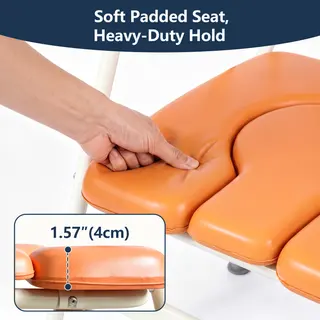
YMX6108K
Multi-angle reclining backrest, wide-stance frame, second bucket included
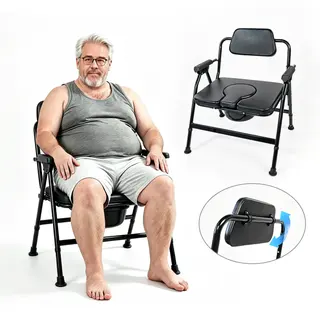
YMX6301KB
Extra-strong triangular frame, extra-wide seat, adaptive backrest
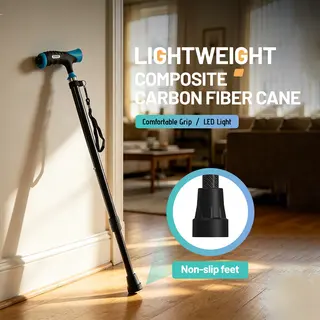
LM4904
Carbon fibre cane with a built-in LED light in the handle, dual-handle support and 10-level height adjustment
Related notes
Price this against your market
Send the category, the market and the quantity band. We reply with material options, MOQ per SKU, lead time and the certificates your market needs.